Civil War Reenacting in New England
Updated: May 27
History, Service, and the Regiment Portrayed by the Liberty Greys
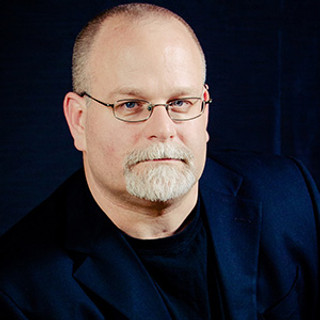
By: Col. Thomas Connell Date: February 11, 2026 - Revised May 27, 2026 Category: Civil War History
Among the living history organizations dedicated to interpreting the Confederate soldier experience, the Liberty Greys occupy a distinctive place. Based in New England, the organization brings together member companies portraying infantry, artillery, and cavalry units drawn from across the Confederate states, from Georgia and Alabama to Tennessee, Mississippi, and Virginia. Together, these companies muster as the 6th Regiment, 1st Division, Army of Northern Virginia, a designation that recognizes the size, longevity, and contribution of the Liberty Greys to Civil War living history in the northeastern United States.
Understanding what that designation means, and what it does not mean, is the starting point for this series.
Origins: The Southern Legion
The Liberty Greys trace their origins to 1996, when Colonel Steve Huddleston founded an organization known as the Southern Legion and brought a high level of organization to Civil War Reenacting in New England. The Legion was ambitious in both scope and structure, drawing member units from all six New England states, New Jersey, the northern reaches of New York, and Canada. At its height, it could field approximately 400 men. The designation of legion was deliberately chosen: the organization incorporated infantry, artillery, and cavalry under a single command, requiring its leadership to be conversant with the operations and deployment of all three branches.
When Colonel Huddleston relocated to New Jersey, command passed to Colonel Joe Leo, who served from 1998 to 1999. During that period, a reorganization was proposed that would divide the Legion into a brigade of three battalions: the New Jersey units would form the 8th Battalion, the New York and Canadian units would petition to become the 9th Battalion, and the original New England core would remain as the 6th. The reorganization proceeded, and at the annual meeting where the change was announced, Colonel Joe Pereira was elected to lead the reconstituted 6th.
Becoming the Liberty Greys
As part of the reorganization, the new brigade requested that the 6th release the name Southern Legion, which it did. For Colonel Pereira, this was an opportunity to rebuild, rebrand, and reinforce the organization's identity on its own terms.
The name Liberty Greys was chosen with care. Pereira drew on his background as a Revolutionary War reenactor and his connection to Taunton, Massachusetts, where the Liberty and Union flag was raised in 1774. The parallel was deliberate: when the colonies united against the Crown, north and south stood together in the cause of liberty. Eighty years later, the country those colonies had built was at war with itself, with the southern states again invoking that same word. Liberty had to be in the name.
Greys was chosen as the inclusive noun, and the spelling was intentional. Prior to Noah Webster’s 1828 dictionary, gray and grey were used interchangeably in American English. Webster’s work began to formalize the distinction, but it did not take hold overnight. Even during the Civil War, units went by both spellings: the 28th Pennsylvania Volunteers were known as the Greys Reserve, the Philadelphia Greys served as artillery, and the New Orleans Greys carried the name into the Western Theater. After the war, Confederate veterans were referred to by both spellings. The historian’s instinct called for greys, and so the 6th Regiment, 1st Division, Army of Northern Virginia became the Liberty Greys.
The battle cry adopted by the newly named organization was drawn from the flag of the St. Augustine Blues, which became Company B of the 3rd Florida Infantry in the Army of Tennessee: Any Fate But Submission. It suited a unit with a reputation as a hard-fighting, well-drilled organization.
The Southern Legion name was ultimately adopted by the 8th Battalion, which was fitting, as it had been created by Huddleston for the original organization.
Command Lineage
The Liberty Greys and their predecessor organization have been led by the following officers:
• Colonel Steve Huddleston, Southern Legion, 1996–1998
• Colonel Joe Leo, Southern Legion, 1998–1999
• Colonel Joe Pereira, Liberty Greys, 1999–2010
• Colonel Paul Glenowitz, 2010–2011
• Colonel Leonidas Jones, 2011–2016
• Colonel Paul Plant, 2016–2019
• Colonel Randy Porteus, 2019–2024
• Colonel Thomas Connell, 2024–present
Following Colonel Pereira’s tenure, all succeeding colonels were elevated by election of the membership while serving as lieutenant colonel. Colonel Porteus had previously served as Regimental Surgeon before becoming lieutenant colonel. Colonel Connell served as Captain of Company B, 4th Alabama Infantry, prior to his tenure as lieutenant colonel. Colonels Pereira, Jones, and Connell had each also served as Regimental Chaplain.
Threading through the entire history of the Liberty Greys and their predecessor organization is one constant: Major Harry “Tim” Perkins. Recruited by Colonel Huddleston from his position as color sergeant of the 12th Georgia Infantry to serve as Adjutant of the Southern Legion, Perkins has served continuously for thirty years, advancing from lieutenant to captain to major. He is the only surviving active original member of the 12th Georgia and the longest serving officer in the Liberty Greys. Though Major Perkins no longer takes the field in combat, he remains a fixture at reenacted battles, providing historical narration and context to spectators — a living link between the organization’s founding and its present mission.
The 1st Division, Army of Northern Virginia
The 1st Division, Army of Northern Virginia, is a Mid-Atlantic-based living history organization and the parent organization of the Liberty Greys. Member units within the 1st Division are organized as battalions or regiments, each a regional composite organization whose member companies portray units from various Confederate states, mirroring the multi-state composition of the historical Army of Northern Virginia itself. When a new composite unit is accepted into the Division, it is assigned the next available battalion number. The 6th was the sixth such conglomerate unit to join. Depending on attendance at ANV maximum effort events, a unit may earn the designation of regiment rather than battalion. The Liberty Greys hold that distinction as the 6th Regiment.
The Historical Army of Northern Virginia
The army that the 1st Division takes its name from was the primary Confederate military force in the Eastern Theater of the American Civil War, and the primary command structure of the Department of Northern Virginia. As was typical of Confederate army naming conventions, the designation reflected the army’s primary area of operations. It was most often arrayed against the Union’s Army of the Potomac.

Its roots lie in the Confederate Army of the Potomac, formed from Confederate units defending northeastern Virginia beginning in the spring of 1861, with General P.G.T. Beauregard assuming command in late May of that year (Eicher and Eicher 2001). Following the First Battle of Bull Run in July 1861, the Army of the Shenandoah under General Joseph E. Johnston merged into it, with Johnston assuming overall command. The consolidated force was officially redesignated the Army of Northern Virginia on March 14, 1862 (U.S. War Department 1891). General Robert E. Lee formalized the designation in Special Orders No. 22, dated June 1, 1862, when he assumed command in place of the wounded Johnston, and the Army of Northern Virginia soon became the defining military force of the Confederate war effort in the East.
The Army of Northern Virginia was organized into divisions, each commanded by a general officer and comprising between three and five brigades of infantry, typically supplemented with artillery. Those divisions and brigades were not composed exclusively of Virginia troops. North Carolina, South Carolina, Alabama, Mississippi, Georgia, and occasionally other Confederate states all contributed regiments to the army. At no point did any of those units become Virginia troops; they retained their state identities throughout the war.
With Lee in command, the army won consequential victories at Fredericksburg and Chancellorsville, fought the bloodiest single day of the war at Antietam, and carried the Confederate cause to its furthest northern advance at Gettysburg in July 1863 (Gallagher 1997). The Overland Campaign of 1864 and the subsequent Siege of Petersburg marked the most grueling phase of the army’s existence. When Lee surrendered at Appomattox Court House on April 9, 1865, fewer than 28,000 men remained to be paroled, a fraction of the force that had taken the field three years earlier (Gallagher 1997).
The historical record of that army, its campaigns, its soldiers, and its human cost, is the interpretive backdrop against which every Liberty Greys member company does its work.
What the Liberty Greys Portray
The member companies of the Liberty Greys each portray a specific historical company within a specific historical regiment. Those regiments served in the Army of Northern Virginia or in Confederate forces that fought alongside it, and their combat records are documented in the official records, regimental histories, and personal accounts of the war. The historical 12th Georgia, the 4th Alabama, the 7th Tennessee, the 15th Alabama, and the other units represented within the Liberty Greys each carry their own documented service histories, their own casualty figures, and their own names in the official records.
What unites them within the Liberty Greys is not a shared regimental history but a shared interpretive standard: accuracy, restraint, and respect for the soldiers being portrayed. Each company brings a different geographic and regimental identity to the field. Together, they represent the diversity of the Army of Northern Virginia itself, an army drawn from across the Confederate states, united by the circumstances of the war and the demands of the campaigns it fought.
A Series Begins Here
This article serves as the opening chapter in an ongoing regimental history series. Future entries will feature the individual companies and member units of the Liberty Greys, exploring the histories of the regiments and batteries they portray. These include:
• 4th Alabama Infantry Regiment, Company B, known as the “Tuskegee Zouaves”
• 12th Georgia Infantry Regiment, Company F
• 12th Georgia Infantry Regiment, Company G
• 7th Tennessee Infantry Regiment, Company D
• 15th Alabama Infantry Regiment, Company G
• 21st Mississippi Infantry Regiment
• Morton’s Battery
• The Richmond Howitzers
• 35th Virginia Cavalry Battalion, Company A
• 35th Virginia Cavalry Battalion, Company B
Each article will stand on its own historically, while contributing to a broader understanding of how diverse Confederate infantry, artillery, and cavalry units are interpreted within a single living history organization. Together, they tell not just the story of regiments, but the ongoing work of preserving and teaching history.
This article is part of the Liberty Greys Civil War History Series.
References
Eicher, John H., and David J. Eicher. Civil War High Commands. Stanford University Press, 2001.
Gallagher, Gary W. The Confederate War. Harvard University Press, 1997.
U.S. War Department. The War of the Rebellion: A Compilation of the Official Records of the Union and Confederate Armies. Washington: Government Printing Office, 1891.


Comments