The 6th Virginia Infantry Regiment
- Thomas Connell II

- Feb 11
- 5 min read
Updated: Feb 12
History, Service, and the Regiment Portrayed by the Liberty Greys
By: Col. Thomas Connell Date: February 11, 2026 Category: Civil War History
Among the many regiments that marched under the banners of Virginia during the American Civil War, few better reflect the early character and long endurance of the Confederate soldier than the 6th Virginia Infantry Regiment. Organized in the spring of 1861 and serving continuously until the closing months of the war, the 6th Virginia stood with the Army of Northern Virginia through some of the most consequential campaigns of the conflict (Davis 1890; Krick 1996).
Today, the regiment is portrayed by the Liberty Greys, a New England–based living history organization dedicated to interpreting the Civil War soldier experience with accuracy, restraint, and respect. While the Liberty Greys include multiple member companies portraying a variety of Confederate units, the 6th Virginia serves as the foundational regimental identity of the organization and the historical lens through which its interpretive mission is framed.
Formation and Early Service
The 6th Virginia Infantry Regiment was organized in May 1861 at Norfolk, Virginia, with companies raised primarily from Norfolk city and the surrounding counties of Princess Anne, Nansemond, and Chesterfield (Virginia Regimental Histories Commission 1912; National Park Service n.d.). Like many early-war Virginia units, its ranks included clerks, laborers, craftsmen, farmers, and professionals who responded quickly to the call to arms following Virginia’s secession from the Union.


The regiment’s early service included garrison and defensive duty along the coast of southeastern Virginia. While lacking the drama of immediate battlefield action, this period proved formative. Drill, discipline, and the routines of army life forged the regiment into a cohesive fighting unit.
By the summer of 1862, the 6th Virginia was reassigned to active field service and attached to the Army of Northern Virginia. Under the leadership of officers such as Colonel William Mahone, the regiment entered sustained combat operations as part of what would become Mahone’s Brigade, one of the army’s most reliable combat formations (Gallagher 1997).
Campaigns of the Army of Northern Virginia
Once in the field, the 6th Virginia Infantry Regiment saw extensive service across the Eastern Theater, fighting from the Peninsula Campaign through the final surrender at Appomattox. Its combat record reflects both the intensity of the campaigns in which it served and the steady erosion of its ranks over four years of hard service.
During the Seven Days’ Battles of 1862, the regiment was heavily engaged at Malvern Hill, where it reported 51 casualties in a single action, an early indication of the losses it would continue to sustain (U.S. War Department 1891). Later that year, the regiment fought at Second Manassas and Fredericksburg, followed by service at Chancellorsville in the spring of 1863.
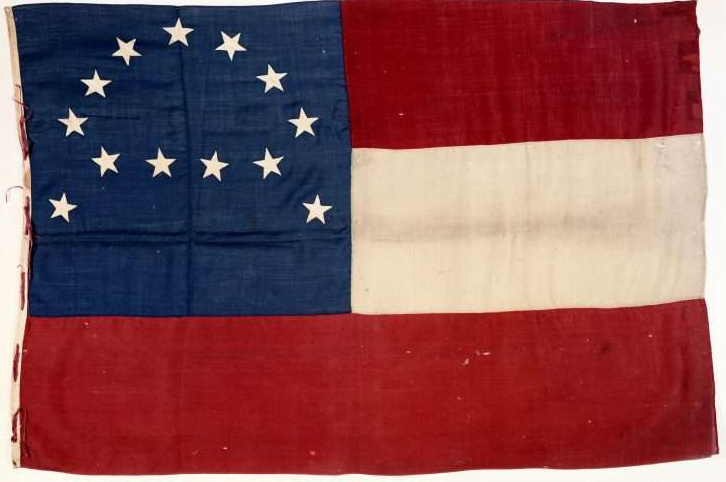
At Gettysburg, the 6th Virginia entered the campaign with 288 officers and men engaged. By the battle’s end, the regiment had suffered approximately thirty percent casualties, a figure consistent with the severe fighting experienced by Mahone’s Brigade during the campaign (Krick 1996).
The Overland Campaign of 1864 and the subsequent Siege of Petersburg marked the most grueling phase of the regiment’s service. The 6th Virginia fought in the Wilderness, at Spotsylvania Court House, and later in the trench warfare around Petersburg. It was heavily engaged during the Battle of the Crater, where Mahone’s Brigade played a decisive role in counterattacking Union forces, at significant cost in lives and endurance (National Park Service n.d.).
By late 1864, continuous combat had reduced the regiment to a fraction of its original strength. Contemporary accounts note that in some actions, as few as fifteen men remained untouched by wounds, capture, or illness (Virginia Regimental Histories Commission 1912).
Endurance and Surrender
In the final months of the war, the 6th Virginia remained entrenched around Petersburg and participated in the Army of Northern Virginia’s retreat westward in the spring of 1865. When the army surrendered at Appomattox Court House on April 9, 1865, the regiment mustered only 110 officers and men present for parole, a stark contrast to its original wartime strength (U.S. War Department 1895).
For many of the regiment’s survivors, the war ended not in triumph or vindication, but in exhaustion, loss, and uncertainty. Their return home marked the beginning of a long national process of memory, reconciliation, and remembrance that would continue for generations.
Why the 6th Virginia Matters Today
The 6th Virginia Infantry Regiment matters not because it was the largest or most celebrated Confederate unit, but because it exemplifies the experience of the ordinary infantry regiment that carried the burden of the war year after year. Its service under commanders such as William Mahone, Thomas J. Corprew, and George T. Rogers reflects continuity, discipline, and endurance rather than brief moments of notoriety (Virginia Regimental Histories Commission 1912).
As a core component of Mahone’s Brigade, the regiment earned a reputation as a dependable and hard-fighting unit, particularly during the final two years of the war. That kind of sustained service gives us a clearer way to interpret the regiment today.
By portraying the 6th Virginia as its foundational regimental identity, the Liberty Greys anchor their living history work in a unit whose story allows visitors to understand the Civil War as it was experienced by most soldiers: long periods of waiting, sudden and violent combat, and the constant presence of hardship, duty, and loss.
A Series Begins Here
This article serves as the opening chapter in an ongoing regimental history series. Future entries will feature the individual companies and member units of the Liberty Greys, exploring the histories of the regiments and batteries they portray. These include:
4th Alabama Infantry Regiment, Company B, known as the “Tuskegee Zouaves”
12th Georgia Infantry Regiment, Company F
12th Georgia Infantry Regiment, Company G
7th Tennessee Infantry Regiment, Company D
15th Alabama Infantry Regiment, Company G
21st Mississippi Infantry Regiment
Morton’s Battery
The Richmond Howitzers
35th Virginia Cavalry Battalion, Company A
35th Virginia Cavalry Battalion, Company B
Each article will stand on its own historically, while contributing to a broader understanding of how diverse Confederate infantry, artillery, and cavalry units are interpreted within a single living history organization. Together, they tell not just the story of regiments, but the ongoing work of preserving and teaching history.
This article is part of the Liberty Greys Civil War History Series.
References
Davis, William C. The Confederate Soldier. Baton Rouge: Louisiana State University Press, 1890.
Gallagher, Gary W. The Confederate War. Cambridge, MA: Harvard University Press, 1997.
Krick, Robert K. Staff Officers in Gray: A Biographical Register of the Staff Officers in the Army of Northern Virginia. Chapel Hill: University of North Carolina Press, 1996.
National Park Service. “6th Virginia Infantry.” U.S. Department of the Interior. Accessed 2026.
United States War Department. The War of the Rebellion: A Compilation of the Official Records of the Union and Confederate Armies. Series I. Washington, DC: Government Printing Office, 1891–1895.
Virginia Regimental Histories Commission. Virginia Regiments in the War Between the States. Richmond: Superintendent of Public Printing, 1912.
Comments